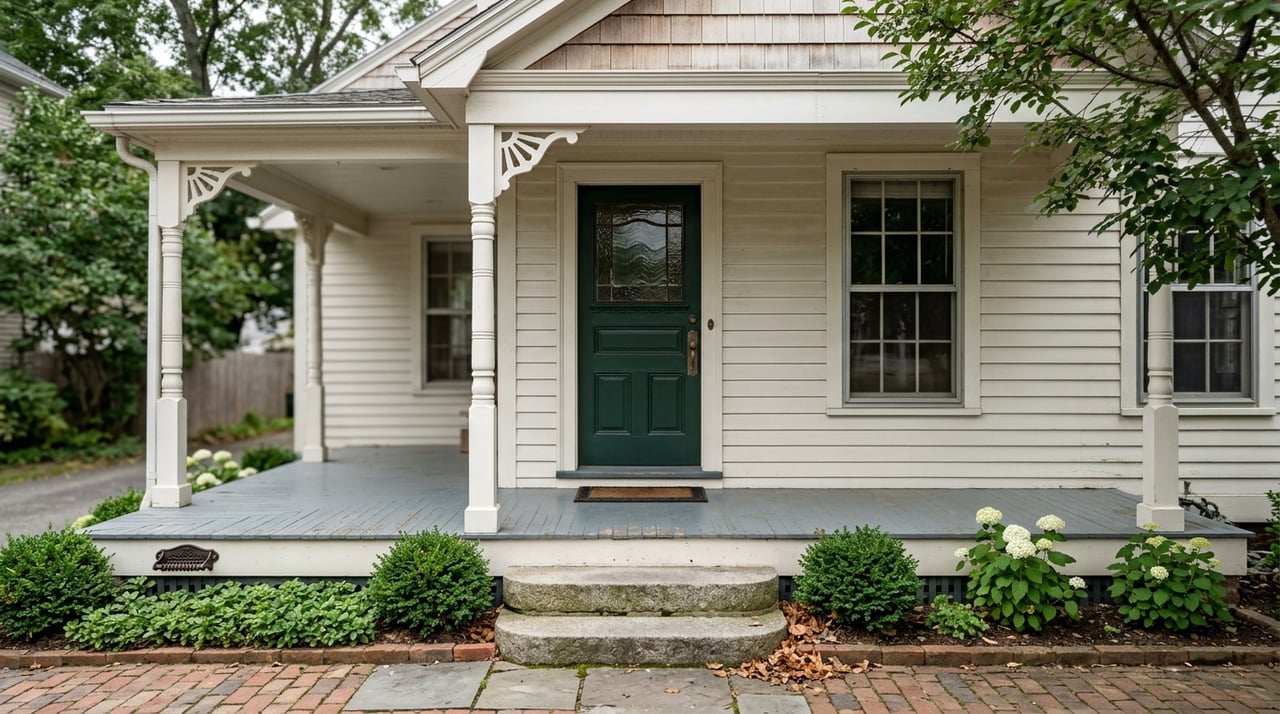
Old houses can be easy to fall in love with and hard to evaluate clearly. If you are thinking about buying a historic home in Glens Falls, you are probably drawn to the charm, craftsmanship, and story, but you also want to know what you are really signing up for. This guide will help you understand the local housing stock, the styles you are most likely to see, and the practical checks that matter before you buy. Let’s dive in.
Why historic homes stand out in Glens Falls
Glens Falls has a housing story shaped by growth in the 1800s and early 1900s. According to the National Register survey, the city developed from a water-powered industrial settlement into a city with a central business district and surrounding residential areas filled with larger homes on deep lots.
That history still shows up in today’s market. The survey found that many of the city’s most important historic resources date from about 1830 to 1930, with a strong concentration of surviving homes from the post-Civil War period. Current census profile data also show 7,380 housing units in the city and a median owner-occupied value of $212,200.
Another reason these homes matter is that many older buildings did not survive. The same survey notes that fires in 1864 and 1902, along with later urban renewal, removed a number of earlier structures. Because of that, intact historic homes in Glens Falls often carry added local significance.
Where you will see historic character
Downtown’s Three Squares Historic District anchors the city’s historic core. The National Register survey notes that many of the most intact surviving properties in Glens Falls are substantial residences rather than small cottages.
For you as a buyer, that means historic housing here often comes with generous scale, deeper lots, and more architectural detail than you might expect. It also means no two homes age in exactly the same way. A house may have beautiful original features in one area and major updates or alterations in another.
Common historic home styles
If you are shopping for a historic home in Glens Falls, you will most often see houses built before World War I or at least before 1930. Truly early-19th-century homes do exist, but the National Register survey says they are rare and often substantially altered.
Italianate and Second Empire influences
Homes from about 1865 to 1880 may show Italianate or Italianate-Second Empire features. In Glens Falls, that can include brick construction, mansard roofs, and ornate decorative details inspired by popular pattern books of the period.
These homes often have strong curb appeal and distinctive rooflines. They can also require careful review of masonry, roof condition, and past exterior repairs.
Queen Anne homes
Queen Anne homes from about 1880 to 1900 are some of the most visually detailed historic properties buyers may encounter. The survey describes features like towers, porches, mixed exterior textures, slate, shingles, and varied silhouettes.
These homes tend to win buyers over quickly because they feel unique. At the same time, more detail usually means more areas to inspect, maintain, and repair over time.
Colonial Revival and related styles
From about 1900 to 1911, Glens Falls also saw Colonial Revival, Georgian Revival, and Renaissance Revival homes. These are often more symmetrical and formal in appearance than earlier Victorian-era designs.
If you want historic character with a slightly more restrained look, these homes may feel like a good fit. They still need the same level of due diligence, especially when systems and materials have been updated over many decades.
What to inspect first
A historic home purchase should start with a careful, systems-minded review. National Park Service preservation guidance emphasizes regular inspection, monitoring, and seasonal maintenance, with a focus on repairing historic materials instead of replacing them whenever possible.
That approach matters because older homes often perform best when you understand how they were built and how they manage water, air, and wear over time. Before you get too attached to finishes, look closely at the parts of the home that protect the structure.
Priority areas to review
Pay close attention to:
- Roof condition and water-shedding systems
- Windows and signs of deferred repair
- Plaster or stucco condition
- Porches and exterior trim
- Moisture intrusion in basements, walls, or ceilings
- Any code-sensitive upgrades that may already have been completed
In many historic homes, water management is the first big clue. A home with a well-maintained roof, sound drainage, and controlled moisture usually gives you a better starting point than one with visible water issues.
Why permit history matters
In Glens Falls, the city’s Building & Codes department issues building permits and conducts code inspections. The city’s Planning & Zoning department also reviews site plans and architectural plans through the Planning Board and Zoning Board of Appeals.
For you, that makes permit history an important part of the buying process. If a home has had additions, reroofing, window changes, electrical work, or other major alterations, you should verify what was done and whether the work appears to match the property record.
Smart questions to ask
As you evaluate a property, ask for clarity on:
- When major updates were completed
- Whether permits were pulled for those updates
- Whether there are records for additions or exterior changes
- What work was done recently versus decades ago
This is especially important in historic homes because changes made years ago may affect both current condition and future project planning.
What National Register status means
Buyers sometimes assume that a National Register property comes with automatic restrictions. According to National Park Service guidance, National Register listing is mostly honorary at the federal level and does not itself impose restrictions on a private owner.
That said, it also does not mean every project is free from review. State laws, local ordinances, or federally funded projects can trigger added review, so it is important to verify what rules apply to the specific parcel you are considering.
The key takeaway is simple: do not assume, and do not guess. If preservation status is part of the property story, make sure you understand how that status does or does not affect your plans.
Lead paint and age-related risks
Age is part of the appeal of a historic home, but it can also come with health and renovation considerations. EPA states that older homes are more likely to contain lead-based paint, and 87% of homes built before 1940 have some lead-based paint.
EPA also notes that homes built before 1978 are more likely to contain lead-based paint. If future renovation work will disturb painted surfaces, that work should be handled with lead-safe certified contractors.
This does not mean every older home is unsafe or unmanageable. It means you should go in informed, ask the right questions, and plan renovation work carefully.
Energy upgrades that make sense
Many buyers worry that a historic home automatically means high utility bills and endless inefficiency. The better mindset is to focus on smart improvements in the right order.
The U.S. Department of Energy says many older homes have less insulation than newer ones, and adding insulation can reduce energy bills. DOE also recommends an energy assessment, or home energy audit, to identify air-sealing opportunities.
NYSERDA adds that air sealing and insulation can help address drafts, moisture issues, uneven temperatures, comfort, air quality, and energy savings. For many Glens Falls historic homes, that makes an assess-first, repair-first strategy the most practical route.
Best first steps for efficiency
A measured plan often looks like this:
- Assess where the home is losing air and managing moisture poorly.
- Repair existing materials where possible.
- Improve insulation where deficiencies are clear.
- Evaluate larger projects only after the basics are addressed.
This approach also lines up with National Park Service preservation guidance, which emphasizes maintaining historic materials and using compatible repair methods.
Balancing character and upkeep
Historic homes in Glens Falls can be incredibly rewarding to own. They offer architectural detail, established settings, and a connection to the city’s growth from the 1800s into the early 1900s.
They also ask more from a buyer than a quick showing and a standard checklist. You need to understand the house’s age, style, repair history, permit record, and likely maintenance needs so you can make a confident decision.
If you are buying in Glens Falls, the goal is not to avoid old houses. The goal is to evaluate them clearly, protect your budget, and know which homes have been cared for in a way that supports long-term ownership.
When you want a calm, local guide for buying a character-filled home in Glens Falls or anywhere nearby, Julie Snyder can help you navigate the details with confidence.
FAQs
What ages are most historic homes in Glens Falls?
- In Glens Falls, a historic home usually means a house built before World War I or at least before 1930, with many surviving examples dating to the post-Civil War period.
What historic home styles are common in Glens Falls?
- Buyers in Glens Falls are most likely to see Italianate, Italianate-Second Empire, Queen Anne, Colonial Revival, Georgian Revival, and Renaissance Revival homes.
What should buyers inspect first in a Glens Falls historic home?
- Focus first on the roof, water-shedding systems, windows, plaster or stucco, porches, moisture intrusion, and any major upgrades that may affect current condition or code compliance.
Do Glens Falls historic homes need permit research?
- Yes. Because the city handles permits and inspections through Building & Codes, it is wise to review records for additions, reroofing, window changes, electrical work, and other major alterations.
Does National Register status restrict a private owner in Glens Falls?
- Not automatically. National Register listing is mostly honorary at the federal level, but buyers should still verify whether state laws, local ordinances, or federally funded projects create added review for a specific property.
Are energy upgrades worth it in an older Glens Falls home?
- Often, yes. An energy assessment, air sealing, and insulation improvements can help with drafts, comfort, moisture, and energy use, especially when repairs are planned carefully around historic materials.